Hmm I don't think physiology is right. The sicene of physical form, whatever that's properly called.

|
03-04-2016 11:18 PM
#826
| |


|
Hmm I don't think physiology is right. The sicene of physical form, whatever that's properly called. |
| |
|
03-04-2016 11:25 PM
#827
| |
 AINT SHOVELING SHIT
|
|
|
03-05-2016 01:45 AM
#828
| |

 
|
Can jet fuel melt steel beams? I'm asking for a friend... |
|
03-05-2016 11:47 AM
#829
| |
AINT SHOVELING SHIT
|
|
Last edited by MadMojoMonkey; 03-05-2016 at 11:58 AM. | |
|
03-05-2016 01:26 PM
#830
| |
AINT SHOVELING SHIT
|
|
|
03-05-2016 10:21 PM
#831
| |
|
Can burning office furniture, computers, carpet etc melt steel beams? |
| |
|
03-05-2016 10:23 PM
#832
| |
|
Can jet fuel melt passports? |
| |
|
03-05-2016 10:40 PM
#833
| |
AINT SHOVELING SHIT
|
|
|
03-06-2016 01:17 AM
#834
| |


|
afaik the beams didn't melt, they were just weakened by heat, which happens at well under the melting point. And the molten metal that conspiratards were talking about wasn't steel, but aluminum, which has a lower melting point than steel, i believe. |
|
03-06-2016 08:51 AM
#835
| |
|
|
| |
|
03-06-2016 11:44 AM
#836
| |
AINT SHOVELING SHIT
|
|
|
03-06-2016 11:58 AM
#837
| |
AINT SHOVELING SHIT
|
|
|
03-06-2016 01:58 PM
#838
| |
|
|
| |
|
03-06-2016 01:59 PM
#839
| |
|
|
| |
|
03-06-2016 02:52 PM
#840
| |
AINT SHOVELING SHIT
|
|
|
03-06-2016 02:56 PM
#841
| |
AINT SHOVELING SHIT
|
|
|
03-06-2016 04:40 PM
#842
| |
|
I just tend default towards a "bullshit" position when it comes to 9/11. |
Last edited by OngBonga; 03-06-2016 at 04:45 PM.
| |
|
03-07-2016 12:48 AM
#843
| |
AINT SHOVELING SHIT
|
|
|
03-07-2016 01:42 PM
#844
| |
|
Professor Brian Cox, demonstrating that he's capable of changing his views based on new information... |
| |
|
03-07-2016 02:38 PM
#845
| |
AINT SHOVELING SHIT
|
|
|
03-17-2016 05:25 PM
#846
| |
AINT SHOVELING SHIT
|
Rain of Balls |
|
03-18-2016 02:20 PM
#847
| |
AINT SHOVELING SHIT
|
|
|
03-18-2016 03:43 PM
#848
| |
|
Just noticed you replied to this here! |
| |
|
03-18-2016 04:36 PM
#849
| |
AINT SHOVELING SHIT
|
|
|
03-18-2016 10:19 PM
#850
| |
|
|
| |
|
03-27-2016 02:21 PM
#851
| |
|
How come bicycles stay upright while in motion? |
|
03-27-2016 02:41 PM
#852
| |
AINT SHOVELING SHIT
|
|
|
03-27-2016 03:35 PM
#853
| |
|
is that why if the rider is drunk they exagerate the natural left/right wobble and end up going all over the road? |
|
03-27-2016 04:37 PM
#854
| |
AINT SHOVELING SHIT
|
|
|
04-11-2016 05:04 PM
#855
| |


|
More geometry than physics I guess, but if you were looking up at space from earth and had vision good enough to see to the edge of the observable universe, what percentage of your field of view would be covered by matter (stars, planets, comets, what have you)? |
| |
|
04-11-2016 07:48 PM
#856
| |
AINT SHOVELING SHIT
|
|
Last edited by MadMojoMonkey; 04-11-2016 at 09:08 PM. | |
|
04-11-2016 09:44 PM
#857
| |
AINT SHOVELING SHIT
|
Ugh. The more I think about it, the more it becomes a problem of resolution and exposure time. |
|
04-12-2016 02:24 AM
#858
| |
|
Thanks for entertaining the question, I in no way expected some precise measurement. I did think about your last point too, and sort of came to the conclusion that maybe the milky way's stars, being so much closer, would account for the vast majority of the visible matter, and at any given moment would block out a huge part of what's beyond. Then again I would think that the Hubble images show the halos of the stars, not the matter, and there would be waaaay less of matter than is apparent in the photos. Being in intergalactic space would probably change things a lot. I'd already be willing to accept the 30ish% for intragalactic. I thought about this first a long time ago as a kid watching star trek/galactica etc, how likely is it to hit something when moving at warp speed. |
| |
|
04-15-2016 02:28 PM
#859
| |
|
Do individual pieces of tnt have gravity? |
|
04-15-2016 03:11 PM
#860
| |
 SPLENDID GUY
|
|
|
| |
|
04-15-2016 05:31 PM
#861
| |
AINT SHOVELING SHIT
|
|
|
04-15-2016 05:38 PM
#862
| |
AINT SHOVELING SHIT
|
|
Last edited by MadMojoMonkey; 04-15-2016 at 05:41 PM. | |
|
04-15-2016 08:33 PM
#863
| |
|
Psychics don't predict the future with wild speculation, they know the future. That's not speculation. |
| |
|
04-15-2016 10:46 PM
#864
| |
|
But, I don't appear to have a very strong (if any) gravitational field. Neither does a piece of tnt to my knowledge. Large bendy things (palm trees for example) don't seem to bend towards each other either, so it's not just tiny things that seem to not have a field. |
|
04-15-2016 11:00 PM
#865
| |
|
|
| |
|
04-15-2016 11:41 PM
#866
| |
|
EXCUSE ME, SIR. |
|
04-15-2016 11:50 PM
#867
| |
|
Fuck you, it's the internet, I can be rude and answer questions not directed at me if I want. |
| |
|
04-16-2016 02:09 AM
#868
| |
AINT SHOVELING SHIT
|
|
|
04-16-2016 02:15 AM
#869
| |
AINT SHOVELING SHIT
|
|
|
04-16-2016 02:16 AM
#870
| |
AINT SHOVELING SHIT
|
|
|
04-16-2016 03:23 AM
#871
| |
|
This question was both informative and entertaining. Was well worth it. Ty gentlemen |
|
04-21-2016 08:09 PM
#872
| |
SPLENDID GUY
|
It struck me as a much easier question to ask simply about a very, very small ball of tnt in empty space. Would any of the outer most bits move to infinity after detonation? |
|
| |
|
04-22-2016 12:09 AM
#873
| |
AINT SHOVELING SHIT
|
|
|
04-22-2016 01:40 AM
#874
| |
SPLENDID GUY
|
woot |
|
| |
|
05-03-2016 01:18 AM
#875
| |


|
Daily Mail says the earth's core is two and a half years younger than its crust. In the 1960s they estimated the difference was just a day or two. What are the cliff notes on the way they figured out the difference is 2.5 years? |
|
05-03-2016 09:17 AM
#876
| |
AINT SHOVELING SHIT
|
|
|
05-03-2016 10:24 AM
#877
| |
AINT SHOVELING SHIT
|
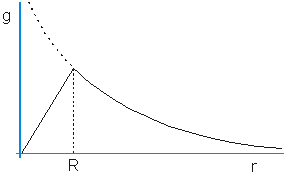
OK, so it's about gravitational time dilation. |
Last edited by MadMojoMonkey; 05-03-2016 at 10:26 AM. | |
|
05-03-2016 07:39 PM
#878
| |
AINT SHOVELING SHIT
|
Ah, so there's a problem with my picture. That's the acceleration of gravity, which means it's a graph of the curvature, not the depth of the gravity well. The well is deepest in the center. |
|
05-03-2016 10:44 PM
#879
| |
|
Right, there is more gravity in the core area so it is younger than the crust area. What I don't understand is how early estimates had the difference at around a day while more recent estimates have the difference at around 2 or 3 years. |
|
05-03-2016 11:22 PM
#880
| |
AINT SHOVELING SHIT
|
Again, I'd need to know what they deemed significant and what they discarded to come up with their numbers in either calculation. |
Last edited by MadMojoMonkey; 05-03-2016 at 11:24 PM. | |
|
05-04-2016 01:44 PM
#881
| |
|
|
| |
|
05-04-2016 01:47 PM
#882
| |
|
Anyway I cam here to ask... why don't they make vacuum walls in cold, hot, or particularly noisy places? Is it simply because of the implosion risk? Have we not got strong enough and cheap enough materials to indefinitely withstand a difference of merely one atmosphere of pressure? |
| |
|
05-04-2016 02:16 PM
#883
| |
AINT SHOVELING SHIT
|
|
|
05-04-2016 02:24 PM
#884
| |
AINT SHOVELING SHIT
|
|
|
05-04-2016 03:07 PM
#885
| |
|
|
Last edited by OngBonga; 05-04-2016 at 08:53 PM. Reason: typos were tilting me
| |
|
05-04-2016 03:11 PM
#886
| |
|
|
| |
|
05-04-2016 08:50 PM
#887
| |
|
So while I was out walking I was thinking about vacuum panels to make walls out of, because thinking shit is good when walking. If you take two identical sized sheets of plastic, and one slightly smaller sheet of metal, placed the metal between the two sheets of plastic so there is a complete border around it, heat it up, then cool it again... the metal will expand as it heats, then as it cools and contracts it will create a (near) vacuum. The plastic would need to melt to seal the edges, but solidify with full strength before the metal has fully contracted. Find me the right plastic and metal please. |
| |
|
05-04-2016 09:23 PM
#888
| |
AINT SHOVELING SHIT
|
Using data from this link, I found the viscosity of water is ~0.001 Pa s and the viscosity of castor oil is ~0.7 Pa s. I know that castor oil is thicker than water, so higher value means less runny. Which is good since viscosity is, roughly, resistance to flow. |
|
05-04-2016 11:12 PM
#889
| |
|
|
| |
|
05-04-2016 11:19 PM
#890
| |
|
In fact it's probably the Earth's own gravity that dominates. There's a large amount of water moving in rhythm to the moon, which means the Earth's own centre of gravity will fluctuate with the tides. This will mean that the molten iron's flow will be constantly shifting its course, albeit only slightly. But again, I suspect we're only in need of a small amount of motion for us to have a significant magnetic field, thanks to the volume. |
| |
|
05-04-2016 11:23 PM
#891
| |
|
I'm obviously no electromagnetism buff, but what happens if you take a large amount of volts and it flows at a low ampage? Does that still create a large magnetic field? |
| |
|
05-04-2016 11:35 PM
#892
| |
|
|
| |
|
05-05-2016 12:39 AM
#893
| |
AINT SHOVELING SHIT
|
|
|
05-05-2016 10:33 AM
#894
| |
|
Until I shit on the carpet. |
| |
|
05-05-2016 09:37 PM
#895
| |
|
Dynamo theory has it covered imo, and it's not a million miles away from what I've been saying. I think where I'm wrong is that I thought gravity is a dominant factor, that it is causing the fluctuations that give us magnetism. But dynamo theory suggests it's convection currents, which makes a whole lot of sense. Columns of hotter, rising molten iron, surrounded by sinking cooler iron. Much like air around a fire. This motion will be constant so long as there's a constant heat source. |
Last edited by OngBonga; 05-05-2016 at 09:39 PM.
| |
|
05-05-2016 10:39 PM
#896
| |
AINT SHOVELING SHIT
|
|
Last edited by MadMojoMonkey; 05-05-2016 at 10:42 PM. | |
|
05-05-2016 11:08 PM
#897
| |
|
|
| |
|
05-06-2016 12:56 AM
#898
| |
AINT SHOVELING SHIT
|
|
|
05-06-2016 07:18 AM
#899
| |
|
|
| |
|
05-06-2016 08:15 AM
#900
| |
|
|
| |
 Posting Permissions
 Originally Posted by wufwugy


 Reply With Quote